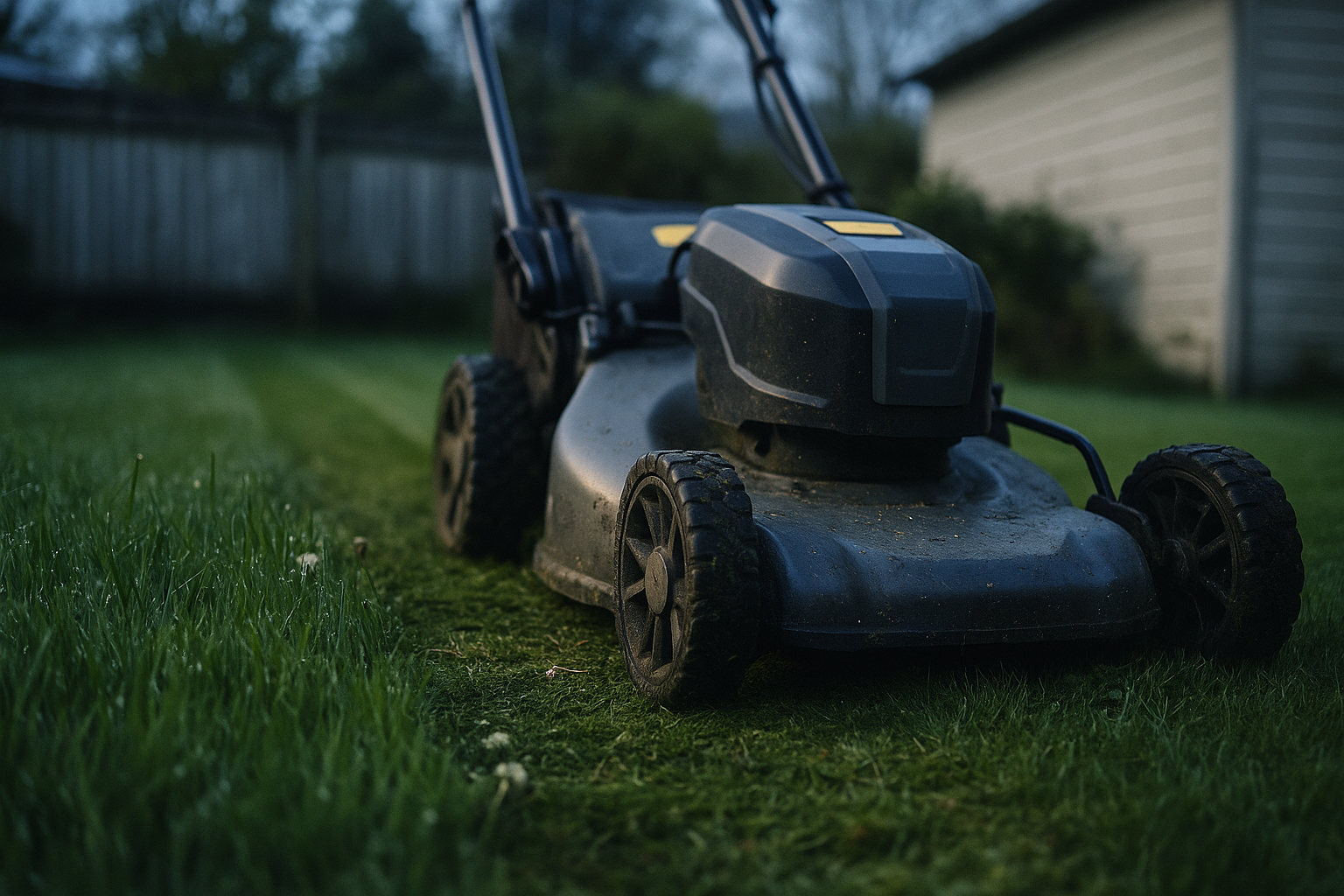
Tackle That Overgrown Spring Lawn with Confidence – Self-Propelled Mowers That Do the Hard Work for You
Why Self-Propelled Electric Mowers Matter This Spring
Spring has a way of turning neat yards into shaggy meadows. A run of warm days and rain can push growth rates to the point where a once-a-week trim suddenly feels like a workout. That’s where high-performance electric, self-propelled mowers shine: they add consistent power, controlled pace, and a refined cut without the fumes, pull-cord rituals, or oil changes associated with traditional engines. For homeowners looking to tackle thicker, damp spring growth while keeping weekends relaxed, these machines bring a practical mix of muscle and manners.
Performance is more than blade speed. What counts is how the mower keeps its blade tip speed and torque under load. Modern brushless motors respond in milliseconds to increased resistance, surging power only when needed. This load-sensing behavior means fewer stalls in heavy patches, smoother transitions from thin to dense turf, and energy savings when the going gets easy. Consider that many electric mowers operate around 15,000–18,000 feet per minute of blade tip speed; keeping that consistent as grass thickens is what maintains cut quality and prevents ragged edges.
There’s also the comfort factor. Typical operator-ear noise for a strong electric unit often lands in the roughly 70–85 dB range, quieter than many gasoline counterparts that can push into the 90s. Reduced vibration and the absence of exhaust make longer sessions more pleasant. A self-propel drive that matches your walking speed—especially a variable-speed rear-wheel setup—helps you climb gentle slopes and push through high spots without straining shoulders. The result is practical productivity: more of your effort goes into steering and planning your path, not wrestling momentum.
Finally, convenience compounds over a season. No seasonal fuel storage, fewer moving parts to service, and instant start mean you’re more likely to mow right when grass height and weather say “go.” Timely cuts help avoid the heavy, energy-sapping mow that follows neglect, and that alone keeps lawns looking better. In short, self-propelled electric mowers turn spring’s growth spurt from a chore into a manageable routine, pairing clean operation with results that look impressively tidy.
Power, Torque, and Drive Systems That Conquer Tough Grass
Raw wattage numbers on a box only tell part of the story. High-performance electric mowers earn their keep with brushless motors that deliver torque efficiently across a broad RPM range. Under load—say, a damp, overgrown swath—the controller meters current to maintain blade speed, preventing bogging and preserving lift. That lift is crucial: it stands grass upright before the cut so blades slice cleanly rather than tearing. Think of it like maintaining a steady rowing stroke through choppy water; the rhythm is what keeps the boat moving forward.
Deck size and blade design factor into the power equation. A 20–22 inch deck clears more ground per pass but asks more from the motor in dense turf. High-lift or combination mulching blades trade a small bump in energy draw for improved clipping circulation and finer mulch. Twin-blade decks can produce a very even finish and finer particles at the cost of higher power demand. When evaluating “high-performance,” consider how a mower balances these elements with load-sensing. You want a machine that only drinks deeply from the battery when the grass earns it.
Self-propel systems are the unsung heroes of spring mowing. Rear-wheel drive improves traction on slopes and when the bag gets heavy; front-wheel drive can feel nimble for flat yards; all-wheel assistance offers extra bite on challenging inclines or uneven patches. Variable-speed controls let you match pace to conditions: slow down for tight edging or push the dial up on long, open stretches. Weight distribution matters too—more weight over drive wheels reduces slip in damp grass, while a balanced chassis avoids nosing down and scalping.
To translate specs into yard reality, visualize three scenarios: - Light weekly trim on a flat 1/8 acre: a single-blade, 20 inch deck with variable rear-wheel drive glides at a brisk pace. - Post-rain recovery cut on a mix of rye and fescue: load-sensing boosts torque to keep blade tip speed steady, preventing clumps. - Sloped backyard with patchy, thick growth: rear- or all-wheel drive curbs wheelspin; a high-lift blade maintains airflow for a cleaner discharge or mulch.
In practice, a well-matched motor-controller-deck trio is what separates a mower that “gets by” from one that feels confident. When the grass pushes back, the right electric drive setup quietly leans in and keeps the cut consistent.
Batteries, Runtime Math, and Total Cost of Ownership
Runtime anxiety fades fast once you connect capacity to coverage. Battery energy is measured in watt-hours (Wh), calculated by multiplying pack voltage by amp-hours. A 40 V, 5 Ah pack stores about 200 Wh; a 56 V, 10 Ah pack stores about 560 Wh. Mowing draw varies by grass density, blade, and deck width, but many self-propelled electrics average roughly 600–900 W while cutting, with peaks above that in heavy patches. At 700 W average, a 560 Wh pack yields around 48 minutes of cutting—more if conditions are light, less if the lawn is a jungle.
How much ground is that? A 20 inch deck at about 3 mph can theoretically cover near 0.6 acre per hour. Real-world overlap, turns, and terrain reduce that to closer to 0.4–0.5 acre per hour. So a 45–50 minute session often translates to roughly 0.25–0.35 acre under normal conditions. Dual-battery mowers that draw from one pack at a time extend sessions seamlessly; others run packs in parallel to stabilize voltage under load. Swappable packs mean you can double coverage for larger lots without waiting on a charge.
Charging times vary with charger output. A 200 Wh pack on a 200 W charger is roughly an hour plus a bit for top-off balancing. Fast chargers shorten downtime but can add heat; thermal management and smart charging curves help preserve cell health. Battery care tips that pay off over seasons include: - Store around 40–60 percent charge if you’ll pause mowing for weeks. - Avoid full discharge to zero; partial cycles are gentler on cells. - Keep packs cool and dry; summer car trunks are hard on chemistry. - Brush off grass before charging so vents stay clear.
Ownership costs favor electric for many yards. If your typical mow uses around 0.6–1.0 kWh, electricity at 13–20 cents per kWh costs roughly 8–20 cents per session. A comparable gasoline session might burn 0.2–0.3 gallons; at $3.50–$4.50 per gallon, that’s around $0.70–$1.35. Over a 25-mow season, the spread can add up to meaningful savings, even when you account for eventual battery replacement after several hundred cycles. Add the lower routine maintenance—no oil changes, plugs, or fuel stabilizer—and electric’s long-term math looks practical as well as pleasant.
Cut Quality, Deck Design, and User Experience
High-performance isn’t just speed; it’s the finish you see when you step back. Deck geometry and airflow drive cut quality. Steel decks bring rigidity and impact resistance; composite or aluminum decks resist rust and often shape airflow efficiently, which can boost lift and mulching performance. Smooth internal contours help clippings recirculate for finer mulch, while a deeper dome can enhance vacuum to stand blades of grass upright. A well-aligned blade, kept sharp, is the simplest upgrade you can make—dull edges tear, leaving gray tips that spoil the look and stress the lawn.
Height adjustment is another quiet hallmark of quality. Single-lever systems make quick work of seasonal changes; multi-point adjusters can be sturdier on heavy-duty frames. Spring mowing often benefits from a higher first pass—say, stepping up 0.5–1.0 inch—and then returning to your target height on a second pass or the following week. Maintaining a healthy height helps root systems and reduces weed pressure. To navigate variable conditions, it helps to remember: - Mulching excels when grass height difference per cut is modest. - Bagging keeps surfaces neat after winter thatch or seed heads. - Side discharge moves quickly in tall, wet growth.
Traction, wheel size, and balance show their worth when grass is slick. Larger rear wheels roll over ruts and reduce resistance; rear-wheel or all-wheel drive keeps you moving without gouging turns. Variable-speed control aligns with your gait, key to avoiding scalps around contours. Many users appreciate an optional striping attachment for those neat, alternating bands; even without one, consistent deck height and steady walking lines produce pleasing contrast as leaf blades lay in alternating directions.
User comfort cements the experience. Softer acoustics make early-morning or after-dinner mows neighbor-friendly. Folding, telescoping handles tighten storage footprints and improve ergonomics for different heights. Safety interlocks, blade-brake clutches, and quick-stop features reduce risk around toys or pets. When you combine refined airflow, sensible deck materials, and an easy, variable drive, the mower feels less like a chore tool and more like a precision instrument that happens to live in your shed.
Conclusion: Choose Confidently and Make Spring Work for You
Choosing a high-performance electric, self-propelled mower starts with your lawn’s realities: size, grass type, terrain, and how often you cut. For compact lots under roughly 1/8 acre, a nimble 18–20 inch deck with a single mid-capacity pack offers quick starts and easy storage. For 1/4–1/2 acre, look to 20–22 inch models with higher-capacity packs or dual-battery bays to limit charge breaks. Slopes and soggy patches tilt the choice toward rear- or all-wheel drive. Thick, mixed-species lawns benefit from load-sensing controllers paired with high-lift or combination blades.
Move through selection with a short checklist: - Match deck width to yard size and gate widths; wider isn’t always faster if maneuvering is tight. - Consider runtime math based on 0.4–0.5 acre per hour of real-world coverage. - Choose drive type to fit terrain; variable speed keeps fatigue low. - Prioritize blade options and height range for seasonal flexibility. - Plan battery care and storage so packs age gracefully.
Once you bring the mower home, small habits pay dividends. Mow when grass is dry if you can, raise the deck a notch for the first spring pass, and keep blades sharp. Clean the deck interior periodically so airflow stays strong. If growth runs away after a rainy week, take two lighter passes rather than one heavy slog; the finish will be cleaner, the motor will draw less, and the lawn will rebound faster.
Electric self-propelled mowers have matured into reliable, capable tools for spring’s growth spurts and the calm weeks that follow. They pair steady torque with quieter operation, require modest upkeep, and give you flexibility to mow when the weather opens a window. Whether you’re tuning a small townhouse patch or managing a roomy backyard with curves and slopes, there’s a configuration that aligns with your yard and your schedule. Pick the features that matter, let the drive do the heavy lifting, and enjoy stepping into a lawn that looks thoughtfully cared for rather than merely cut.