Mississippi River Cruise 2026 for Seniors: The Most Important Information at a Glance
Mississippi River cruises have become a compelling option for seniors who want relaxed travel, strong historical context, and fewer logistical hassles than a complex land tour. In 2026, that appeal is likely to grow as more travelers look for smaller ships, slower pacing, and itineraries centered on culture rather than crowds. An all-inclusive fare can simplify budgeting, but the label does not always mean the same thing from one cruise line to another. Understanding what is truly covered is the first step toward choosing a trip that feels comfortable, worthwhile, and easy to enjoy.
Article outline: 1) what an all-inclusive Mississippi River cruise usually includes; 2) the main itinerary choices and how they compare; 3) life onboard, comfort, and accessibility for seniors; 4) pricing, value, and smart booking strategy for 2026; 5) a practical conclusion to help older travelers choose with confidence.
What “All-Inclusive” Usually Means on a Mississippi River Cruise
The phrase “all-inclusive” sounds wonderfully simple, but on the Mississippi River it deserves a closer look. Unlike some land resorts, a river cruise rarely includes absolutely everything. On many premium river itineraries in the United States, the fare often covers a private cabin, daily meals, selected beverages, onboard entertainment, lectures, Wi-Fi, and at least one excursion in most ports. Some cruise lines also include gratuities, pre-cruise hotel stays, airport transfers, or specialty dining, while others treat those as optional add-ons. For seniors who prefer a predictable budget, these differences matter more than the marketing phrase itself.
A useful comparison is this: ocean cruises often advertise lower entry fares, but many onboard costs appear later, from specialty restaurants to drink packages and added excursion fees. Mississippi River cruises usually start at a higher price point, yet they often bundle more services from the beginning. That can make the total cost easier to understand. Still, travelers should read the fare details carefully. One cruise may include guided walking tours in nearly every stop, while another may charge extra for its more in-depth excursions. One may serve wine and beer with lunch and dinner, while another may include a broader beverage program throughout the day. The river does not rush, and neither should your booking decision.
For seniors, the most valuable inclusions are not always the flashiest ones. Practical benefits often matter more than luxury language. Common features worth checking include:
– Whether shore excursions are included in every port
– Whether gratuities are prepaid
– Whether transfers are included between airport, hotel, and ship
– Whether there is an onboard enrichment program focused on history, music, or regional culture
– Whether room service, laundry, or medical assistance arrangements are available
It is also wise to ask what is not covered. Airfare is frequently separate. Travel insurance is usually extra. Spa services, premium spirits, and upgraded excursions may carry added charges. On some itineraries, a pre- or post-cruise hotel night is optional rather than standard. The safest approach is to request a full list of inclusions in writing before placing a deposit. Seniors traveling on a fixed or carefully planned retirement budget will appreciate that clarity.
The key takeaway is straightforward: an all-inclusive Mississippi River cruise can deliver real value, but only when the inclusions match your needs. A traveler who wants ease, guided touring, and fewer surprise costs may find the higher upfront fare quite sensible. A traveler who prefers maximum independence may care less about bundled extras. The right choice depends on how you travel, not on the label alone.
Choosing the Right Itinerary: Upper, Lower, or Full Mississippi in 2026
One of the most important decisions for senior travelers is not the ship itself, but the stretch of river they want to explore. Mississippi River cruises are commonly divided into three broad itinerary styles: the Upper Mississippi, the Lower Mississippi, and the full-river journey. Each offers a different mood, climate pattern, and historical emphasis. Picking the right one can shape the entire experience.
The Upper Mississippi often includes ports such as St. Paul, Red Wing, La Crosse, Dubuque, the Quad Cities, Hannibal, and St. Louis, depending on the exact route. This region tends to feel more intimate and scenic, with bluffs, wooded shorelines, and a strong connection to Mark Twain-era imagery. It is also where travelers see more locks and a distinctly river-engineering side of the journey. Seniors who enjoy small-town Americana, quieter landscapes, and a gentler visual rhythm often find the Upper Mississippi especially appealing. Weather in late spring and early fall is usually more comfortable than peak summer, when heat and humidity can become tiring.
The Lower Mississippi typically runs between Memphis and New Orleans or nearby variations, with stops that may include Vicksburg, Natchez, Baton Rouge, and Oak Alley or similar plantation-history sites, depending on the cruise program. This section is wider, warmer, and more dramatic in cultural tone. Here the themes often shift toward Civil War history, Delta blues, Creole and Cajun culinary traditions, antebellum architecture, and the layered story of trade, conflict, and migration. For seniors interested in music, food, and complex American history, the Lower Mississippi can feel especially rich. The atmosphere is often livelier than on the northern routes, although summer temperatures can be intense.
Full Mississippi cruises combine both worlds and may last roughly two to three weeks, sometimes longer depending on the line and included land arrangements. These voyages suit travelers who want the broadest possible overview and have the time, budget, and stamina for a longer trip. They can be deeply rewarding, but they also require more planning. A longer cruise means more days away from home, more medications to organize, and more attention to travel insurance and emergency contingencies.
When comparing itineraries for 2026, consider these practical questions:
– Do you prefer scenic calm or stronger cultural contrast?
– Are you comfortable with humid southern weather?
– Would a 7- to 10-night trip suit your energy better than a 14- to 22-night voyage?
– Are you more interested in music and cuisine, or in landscapes and river lore?
– How much walking can you comfortably handle on excursions?
For many seniors, the best first Mississippi cruise is not necessarily the longest one. A shorter Upper or Lower itinerary can be a smart introduction. If you love it, a full-river sailing may become the natural next chapter.
Life Onboard for Seniors: Cabins, Dining, Mobility, and Daily Pace
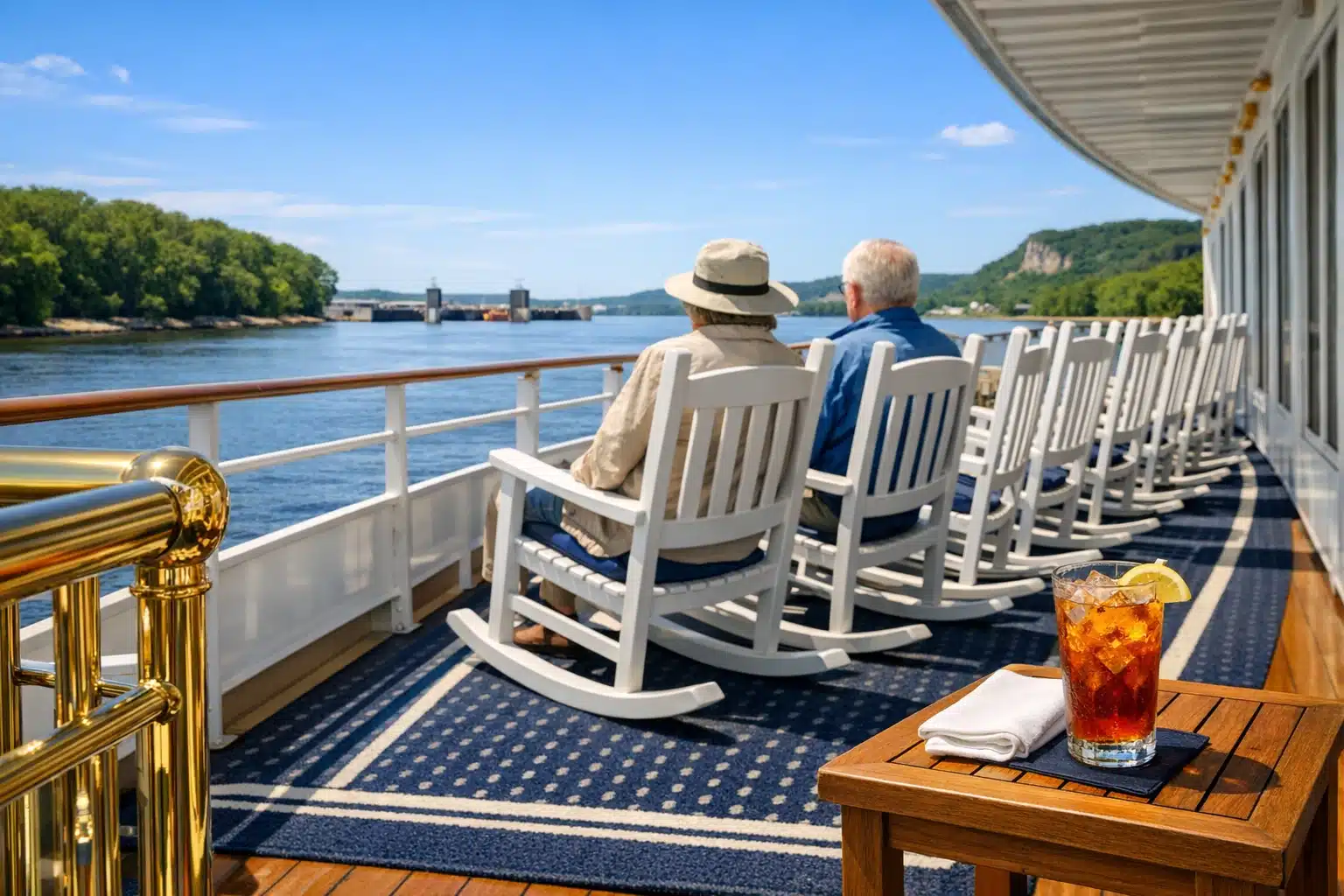
A Mississippi River cruise is usually less about spectacle and more about comfort, rhythm, and thoughtful detail. Most ships on the river are much smaller than large ocean liners, which changes the atmosphere in useful ways for senior travelers. Embarkation is often more manageable, public spaces are easier to navigate, and the overall environment tends to feel quieter and more personal. You are less likely to deal with vast entertainment complexes and more likely to spend time in lounges, observation areas, lecture spaces, and dining rooms where conversations unfold at an easy pace.
Cabins are an important consideration because seniors often spend more time resting between excursions than younger travelers on fast-paced trips. Many Mississippi River ships offer outside-facing rooms, and a number include private balconies or large opening windows. When comparing cabins, look beyond square footage alone. Ask about bathroom layout, shower access, bed height, storage space, night lighting, elevator proximity, and whether mobility devices can fit comfortably. A room that appears elegant in photos may be less practical if it has a narrow entrance or a tub-style shower that is harder to step into safely.
Dining on these cruises is usually one of the strongest features. Meals often highlight regional dishes such as catfish, shrimp and grits, bread pudding, or Midwestern comfort fare, depending on the section of river. The better programs balance local flavor with flexibility, offering lighter dishes and accommodating dietary needs when notified in advance. Seniors managing diabetes, low-sodium diets, gluten intolerance, or other dietary concerns should mention them early. Most reputable cruise operators can work with common dietary restrictions, but advance communication helps the kitchen plan properly.
Mobility is where honest planning becomes essential. Even when a ship itself has elevators and accessible pathways, the ports can present uneven sidewalks, gangway angles, cobblestones, or long coach transfers. Historic towns are charming, but they were not built with modern accessibility standards in mind. Excursions also vary widely. Some are panoramic bus tours with minimal walking. Others include museum visits, district strolls, or stair-heavy sites. Seniors should ask for the activity level of each excursion rather than assuming all river tours are gentle.
Daily life onboard typically includes a mix of sightseeing, lectures, music, and unstructured downtime. That slower pattern is part of the appeal. A typical day may include breakfast with river views, a morning excursion, a relaxed lunch, an afternoon talk on regional history, and live music after dinner. Useful questions to ask before booking include:
– Is there an elevator to every passenger deck?
– Are wheelchairs or walkers easily accommodated?
– Is there a doctor or nurse onboard, or only emergency protocol?
– How strenuous are the included tours?
– Are quiet spaces available for reading and rest?
The best Mississippi River cruises for seniors are not necessarily the most luxurious. They are the ones that combine comfort, accessibility, and a pace that lets the journey breathe.
What a Mississippi River Cruise Costs and How to Judge the Value in 2026
Pricing is where many travelers pause, and understandably so. Mississippi River cruises are rarely budget vacations in the mass-market sense. In general, fares tend to be higher than mainstream ocean cruises because the ships are smaller, the passenger count is lower, and the product is usually positioned as premium travel with more inclusions. For 2026, travelers should expect price variation based on route length, cabin category, season, and the scope of included services. Shorter itineraries may start in the mid-thousands per person, while longer or more upscale sailings can move well into five figures, especially for balcony cabins, suites, or full-river journeys.
That sounds steep until you compare the structure of the trip. A Mississippi River cruise may include lodging, meals, lectures, entertainment, many excursions, and transport between multiple destinations without the need to repack constantly. For older travelers, that convenience has real value. A comparable independent land itinerary across several cities can involve hotel changes, train or flight coordination, luggage handling, restaurant planning, and extra transfers. The cruise bundles those logistics into one floating base. That does not make it cheap, but it can make it rational.
The smartest way to evaluate value is to calculate the full expected cost, not just the brochure fare. Add the following where relevant:
– Airfare or train travel to the embarkation city
– Pre-cruise hotel nights if arrival timing requires them
– Travel insurance
– Optional excursions
– Premium drinks or specialty services
– Post-cruise transportation home
– Possible single supplement if traveling solo
Single travelers should pay special attention. Some river cruises charge a substantial supplement for solo occupancy, while others offer limited single cabins or special promotions. Seniors traveling alone may still find a cruise ideal because of the social environment and bundled logistics, but the supplement can change the value equation dramatically. Booking early can help, especially for popular dates and more accessible cabin types.
Timing also matters. Spring and fall often command strong demand because the weather is generally more comfortable. Summer may occasionally offer more promotional pricing, but higher heat can be a drawback, particularly on the Lower Mississippi. Some cruise lines release 2026 dates well in advance, and early booking may provide better cabin selection rather than huge savings. If you need a specific deck, accessible features, or adjoining arrangements with family members, early booking is often worth more than a modest discount.
Finally, think beyond price and consider fit. A slightly more expensive cruise that includes gratuities, airport transfers, and gentler excursions may be the better deal for a senior traveler than a lower fare with more gaps and more physical demands. Value is not only about spending less. It is about paying for the version of the trip you can actually enjoy.
Conclusion for Seniors: How to Pick the Right Mississippi River Cruise With Confidence
For seniors considering a Mississippi River cruise in 2026, the central question is not whether the river is worth seeing. It clearly is. The better question is what kind of river journey fits your pace, interests, and practical needs. Some travelers want music, Southern cuisine, and the storied ports of the Lower Mississippi. Others want quieter scenery, smaller towns, and the lock-filled charm of the Upper Mississippi. Some want a grand full-river experience, while others would be happier sampling one segment first and leaving room for a return trip later.
The strongest approach is to choose based on comfort and clarity rather than image. Start with the fare details. Confirm what “all-inclusive” truly covers. Then look at mobility demands, excursion style, and climate. A beautiful itinerary is not the right one if the walking is too strenuous, the heat is too draining, or the daily pace leaves no room to rest. Seniors often get the best results when they book with a realistic view of energy level rather than an optimistic guess. There is no prize for choosing the longest cruise if a shorter one would be more enjoyable.
Before booking, it helps to create a short personal checklist:
– Preferred trip length
– Maximum comfortable walking time
– Need for elevator access or accessible bathroom design
– Budget including flights and insurance
– Interest in history, scenery, food, or music
– Tolerance for summer heat and humidity
– Preference for a quiet ship atmosphere or a more social one
If you are traveling as a couple, discuss priorities honestly. One person may care most about balcony space and cabin comfort, while the other cares most about excursions and lectures. If you are traveling solo, ask about supplements and social spaces. If family members are joining, confirm whether the cruise environment matches everyone’s expectations, because Mississippi River cruising is generally about immersion and ease, not nonstop entertainment.
In the end, this kind of voyage appeals to seniors because it offers something increasingly rare in travel: a way to see a large piece of America without rushing through it. The river carries history, architecture, music, food traditions, and changing landscapes in one long narrative. Choose carefully, ask specific questions, and match the cruise to your real travel style. Do that, and a Mississippi River cruise in 2026 can be less about ticking off stops and more about enjoying the journey in a way that feels calm, comfortable, and deeply rewarding.