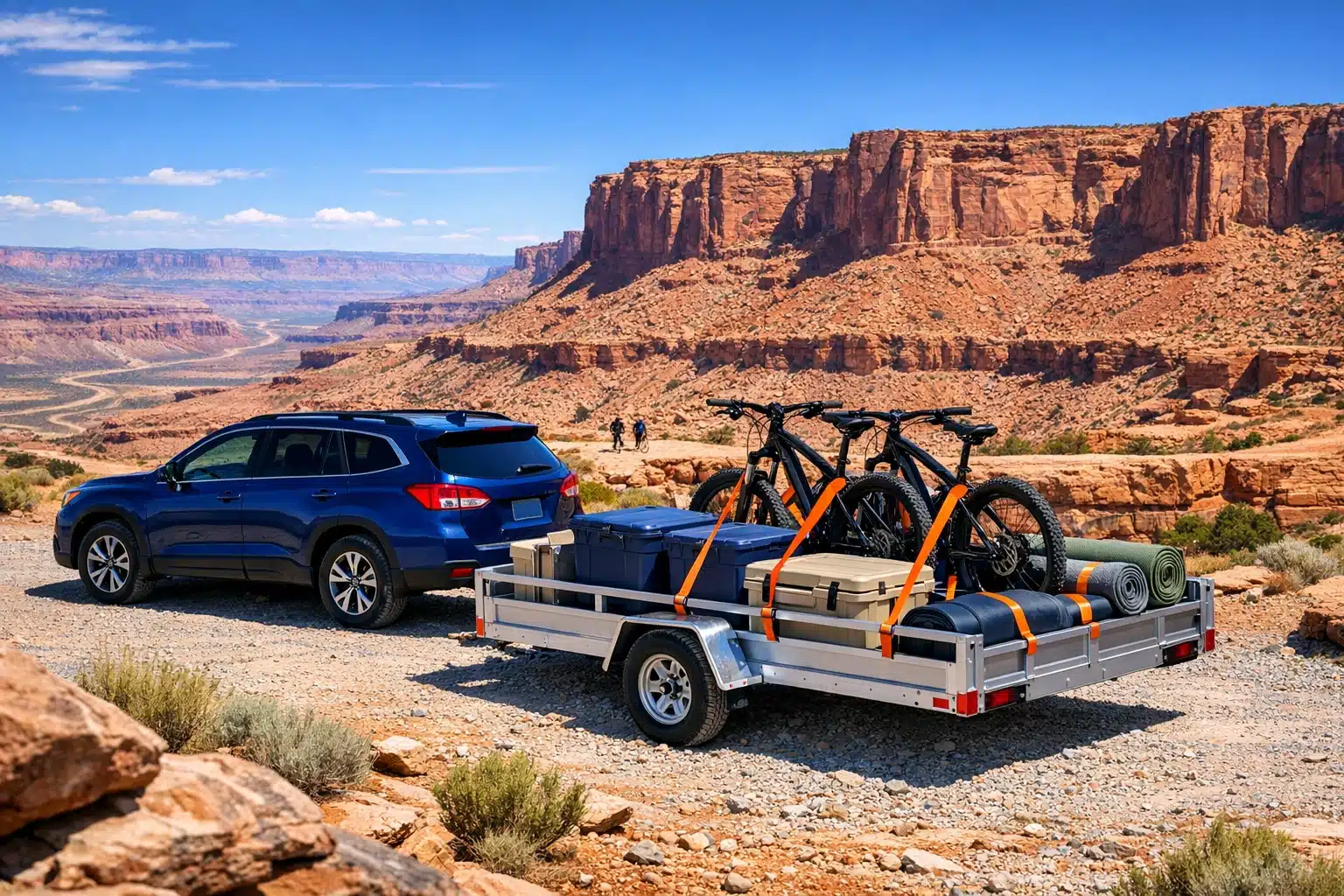
Your Weekend Adventure Starts Here. The Only Trailer Guide You’ll Ever Need
A trailer can turn an ordinary car or truck into a bike shuttle, moving rig, or compact base camp for a two day escape. The real challenge is not hooking one up, but choosing a trailer that suits your plans, your vehicle, and your comfort on the road. This guide explains the essentials in plain English, from trailer styles and tow ratings to loading, maintenance, and buying choices. Spend a few minutes here, and your next weekend trip is more likely to feel organized than improvised.
Outline
• Section 1 explores the main trailer categories and explains which users benefit most from each design. • Section 2 breaks down towing capacity, payload, tongue weight, hitch classes, and brake equipment. • Section 3 focuses on loading, balancing, driving technique, and simple habits that improve control. • Section 4 compares new and used purchases, long term costs, maintenance, and storage considerations. • Section 5 brings everything together with practical advice for readers planning better weekend travel.
1. Understanding Trailer Types and Choosing the Right One
The word trailer sounds simple, yet it covers a wide family of machines with very different purposes. Choosing the right one starts with honesty about how you will actually use it. A homeowner who makes occasional dump runs does not need the same setup as a cyclist hauling four mountain bikes, and neither of them has the same priorities as a couple looking for a compact camper. The right trailer solves a problem elegantly. The wrong one becomes a bulky rectangle that eats storage space and confidence.
Broadly speaking, most buyers compare four common categories. Utility trailers are the open, adaptable workhorses. They are excellent for yard waste, furniture, small equipment, and outdoor gear. Many entry level versions begin around 4 by 8 feet, and lighter models can weigh under 1,000 pounds empty, which makes them manageable for many crossovers and midsize vehicles. Enclosed cargo trailers add weather protection and security, which matters if you carry tools, motorcycles, cameras, or camping gear that should not get soaked or advertised at every gas stop. Travel trailers, including teardrops and small campers, add sleeping, cooking, or storage space for recreation. Boat, horse, and specialty trailers serve more focused needs, and they require a closer look at axle layout, loading method, and braking equipment.
There are useful comparisons within those groups too. A single axle trailer is usually lighter, cheaper, and easier to maneuver by hand in a driveway. A tandem axle trailer often rides more smoothly under load, offers better stability, and provides some reassurance if one tire fails, though it usually costs more and may be harder to pivot in tight spaces. Open trailers are lighter and simpler, but they expose cargo to rain, road grime, and theft. Enclosed trailers protect contents and improve organization, yet they add height, weight, and wind resistance, which can noticeably affect fuel use.
Before buying, ask a few grounded questions:
• What cargo will I carry most often, not just once a year?
• Do I need weather protection or quick loading?
• Can my vehicle tow the trailer comfortably when it is full, not empty?
• Where will I store it?
• Will I value flexibility more than comfort?
If your weekends revolve around bikes, kayaks, or home projects, a small utility or enclosed cargo trailer may be the sweet spot. If the goal is a simple camp setup without hotel bookings, a lightweight teardrop or small travel trailer can feel like freedom on wheels. Matching the trailer to your real routine is the first smart decision, and it sets the tone for every mile that follows.
2. Tow Ratings, Hitch Systems, and the Numbers That Actually Matter
This is the part that intimidates many first time owners, mostly because trailer language sounds like alphabet soup. Still, the core ideas are straightforward once you separate them. Your trailer decision should never be based on engine power alone. A vehicle might feel strong when accelerating, yet still be limited by braking capacity, suspension design, cooling ability, wheelbase, or payload. Towing safely is less about bravado and more about respecting engineering.
Start with the key ratings. Tow rating is the maximum trailer weight a manufacturer says the vehicle can pull under specified conditions. GVWR, or gross vehicle weight rating, is the maximum safe weight of the vehicle itself when loaded with passengers, fuel, and cargo. GCWR, or gross combined weight rating, is the total safe weight of the loaded vehicle plus the loaded trailer. Payload matters because trailer tongue weight presses down on the tow vehicle, and that weight counts against how much the vehicle can carry. For conventional bumper pull trailers, tongue weight is often recommended at roughly 10 to 15 percent of total trailer weight. Too little can encourage sway. Too much can overload the rear axle and lighten steering at the front.
Hitch hardware matters just as much as the numbers on paper. Hitch classes are designed for different loads, and using the correct class is essential. A weight distribution hitch can improve balance on larger setups by shifting some load to the front axle of the tow vehicle, which can make steering and braking feel more composed. Sway control systems, whether friction based or integrated into a weight distribution setup, can also help keep taller or longer trailers from feeling unsettled in crosswinds or when passed by trucks.
Brakes deserve special attention. Many jurisdictions require trailer brakes above a certain weight, but the threshold varies by state or country, often landing somewhere between about 1,500 and 3,000 pounds. Even when they are not legally required, trailer brakes can greatly improve stopping confidence. Electric brake controllers in the cab allow the driver to modulate braking smoothly, and breakaway systems are designed to activate trailer brakes if the trailer becomes detached.
When comparing vehicles, the differences are practical:
• A midsize SUV may tow a small camper well, but payload can disappear quickly once passengers and coolers climb aboard.
• A pickup often offers stronger payload and hitch flexibility, especially for heavier or taller trailers.
• A long wheelbase tow vehicle usually feels more stable than a short one when the road turns windy or uneven.
In short, the right setup is not simply the biggest trailer your vehicle can technically move. It is the combination that leaves room for passengers, cargo, hills, weather, and a margin of calm. That margin is what transforms towing from a tense calculation into an enjoyable habit.
3. Loading, Balance, and Driving Techniques That Keep a Trailer Predictable
A well matched trailer can still behave badly if it is loaded carelessly. This is where many towing problems begin. Drivers often think of weight as the main issue, but placement matters just as much. A trailer that is under its rated limit can still sway, bounce, or push the tow vehicle if the cargo sits too far back, too high, or too unevenly side to side. Good loading is invisible when done correctly, which is exactly the point.
The basic goal is to keep the center of gravity low, distribute cargo evenly, and maintain proper tongue weight. Heavier items should generally sit low and close to the axle area, with enough forward bias to keep the hitch loaded within the recommended range. Loose gear should be strapped down so it cannot shift during turns or emergency braking. One cooler sliding a foot may not sound dramatic, but the trailer will notice immediately. If you are carrying motorcycles, generators, or camping tubs, tie downs are not optional decoration. They are part of the safety system.
Before every trip, a short walk around the trailer saves trouble:
• Check tire pressure on the vehicle and trailer when cold.
• Confirm that coupler, safety chains, and wiring are secure.
• Test brake lights, turn signals, and trailer brakes.
• Verify that ramps, doors, jacks, and latches are locked.
• Recheck straps after the first few miles because cargo often settles.
Driving with a trailer rewards patience. Acceleration takes longer, lane changes require more planning, and stopping distances increase. Speed has an outsized effect on stability, especially with tall campers and enclosed trailers that catch crosswinds like a sail. Many experienced towers choose to drive slower than posted highway limits even when conditions are good, because the trailer feels calmer and tires run cooler. On descents, using lower gears can reduce brake heat. In curves, entering slower and steering smoothly prevents the trailer from making its presence known in all the wrong ways.
Backing up is the rite of passage that humbles everyone at least once. The trick is to go slowly, use small steering inputs, and correct early rather than dramatically. A spotter helps, but only if signals are clear and consistent. Empty parking lots can be excellent classrooms. What feels awkward on day one becomes manageable after a few deliberate practice sessions.
If sway begins, the wrong response is often instinctive. Jerking the wheel or stomping harder on the accelerator can worsen the situation. The better approach is to stay straight, ease off the throttle, avoid abrupt steering, and apply trailer brakes manually if your controller and conditions allow. A stable trailer is not a matter of luck. It is the result of balanced loading, realistic speed, and disciplined habits repeated until they feel natural.
4. Buying, Ownership Costs, Maintenance, and Storage Realities
Buying a trailer is not only about sticker price. Ownership has a rhythm of costs and responsibilities that deserve attention before money changes hands. New trailers offer warranty coverage, cleaner service histories, and the pleasure of starting fresh. Used trailers can deliver excellent value, especially when a previous owner has already added practical upgrades such as spare tire mounts, interior shelving, brake controllers, stabilizers, or upgraded jacks. The catch is that trailers often age in ways casual buyers miss. A shiny exterior can hide dry rotted tires, neglected bearings, roof leaks, or bent frames from one careless encounter with a loading dock.
If you are shopping used, inspect methodically. Look at tire date codes, not just tread depth. Trailer tires frequently age out before they wear out. Check the floor for soft spots, particularly on enclosed or travel trailers. Inspect welds, frame rails, coupler hardware, lights, brake wiring, suspension components, and signs of uneven tire wear that may suggest axle or alignment problems. On campers, pay special attention to sealant around roofs, windows, vents, and seams, because water intrusion is persistent and expensive. A pre purchase inspection by a knowledgeable mechanic or RV technician can be money well spent.
Maintenance is usually simple but should not be ignored:
• Wheel bearings may need periodic inspection and repacking depending on mileage and design.
• Brakes should be checked for wear, adjustment, and proper response.
• Tires need correct pressure, adequate load rating, and replacement when aged or damaged.
• Lights and wiring should be tested regularly because corrosion loves trailer connectors.
• On campers, roof sealant and water management deserve routine attention.
Then there is storage, the least glamorous line item and one of the most decisive. A lightweight utility trailer that folds or stands upright may fit beside a garage. An enclosed cargo trailer might require paid storage. A travel trailer can trigger neighborhood parking restrictions or homeowners association rules. Insurance, registration, security locks, wheel chocks, a cover, and basic accessories all add up. None of this is a reason to avoid owning one, but it is a reason to budget honestly.
Material choice affects long term experience as well. Steel trailers are common, strong, and often less expensive upfront, though they need attention to rust prevention. Aluminum trailers cost more at purchase in many cases, yet they can save weight and resist corrosion better, which matters near salt air or wet climates. The smartest buy is rarely the cheapest option on the lot. It is the trailer whose condition, maintenance history, and practical fit align with how you will use it over the next several years.
5. Conclusion: Choosing a Trailer That Fits Your Weekends, Not Just Your Wishlist
If you have made it this far, the good news is that trailers are not mysterious anymore. They are simply tools, and like any good tool, their value depends on choosing the right one for the job. For the weekend adventurer, that choice should begin with lifestyle, not fantasy. Think about the trip you will take next month, not the cinematic road story you might take someday. If most weekends involve bikes, coolers, folding chairs, and a short drive to a trailhead, a small utility or enclosed cargo trailer may bring more freedom than a large camper ever could. If you want shelter, simpler camp setup, and less time wrestling with tents, a lightweight travel trailer may be worth every inch of driveway space.
The best trailer decision usually comes down to balance:
• Enough capacity for real gear without towing near the limit every time.
• Enough comfort to improve the trip without adding ownership stress.
• Enough durability to last for years without becoming a maintenance project.
• Enough simplicity that you will actually use it often.
That last point matters most. A trailer should expand your options, not create friction before each departure. The setup that wins in real life is the one you can hitch confidently, load logically, store affordably, and tow without white knuckles. For some readers, that means a compact single axle utility trailer that handles everything from landscaping supplies to camping tubs. For others, it means a tidy teardrop with a mattress, galley, and the quiet pleasure of waking up near a lake before the crowds arrive.
Here is the practical path forward. Start by checking your vehicle ratings and measuring your storage space. Then list your three most common trailer uses. Compare empty weight, payload, axle count, height, and brake equipment before you compare paint color or clever marketing names. When possible, see the trailer in person, hitch it up, and imagine loading it on a tired Friday evening. If the process feels manageable, you are probably looking in the right direction.
A good trailer does not just carry things. It carries possibility. It turns spare hours into workable plans and makes the line between home and getaway a little shorter. For readers who want more spontaneous weekends with fewer compromises, the smartest move is not buying the biggest trailer available. It is choosing the one that makes leaving easy, arriving simple, and the road ahead feel open in the best possible way.