A Portugal Getaway Full of Ocean Views and Local Charm
Introduction
Portugal appeals to travelers who want more than pretty scenery, because its coastline comes with layered history, walkable towns, and a daily rhythm shaped by the Atlantic. In one trip, you can watch light spill across Lisbon’s tiled hills, eat grilled fish in a harbor where boats still leave at dawn, and finish the evening beside a beach edged by cliffs. That blend of beauty, access, and lived-in culture makes Portugal especially relevant for people seeking rest without giving up substance.
Outline
- Why Portugal stands out as a compact coastal destination with distinct regional character
- How Lisbon, Cascais, and Sintra combine big views, history, and easy day trips
- What makes Porto and the north feel different in atmosphere, food, and shoreline experience
- Where to find quieter beaches, surf towns, and cliffside scenery from central Portugal to the Algarve
- How to plan a trip that feels local, comfortable, and well paced for different kinds of travelers
Why Portugal Works So Well for an Ocean-Focused Escape
Portugal has a special advantage for travelers who care about the sea: it is geographically manageable without feeling small in experience. The country offers a long Atlantic-facing coastline on the mainland, and although distances are not tiny, they are far easier to handle than in many larger beach destinations. That means a visitor can move from an urban waterfront to a surf town, then to a quieter fishing village, without spending half the holiday in transit. For travelers with one week or even a long weekend, that efficiency matters. It turns the idea of a varied coastal trip from a fantasy into something practical.
What makes Portugal more interesting than a simple beach map is the way the ocean shapes daily life. The Atlantic is present in the food, the architecture, the weather, and even the pace of local routines. Fishing remains part of the identity of many coastal towns, and seafood is not just a tourist product but part of ordinary meals. Salt cod, sardines, octopus, clams, and grilled fish appear in ways that are regional rather than generic. Even inland cities like Lisbon and Porto feel connected to the sea through river estuaries, maritime history, and trade routes that helped define Portugal for centuries.
There is also a useful contrast between regions. Lisbon feels bright, outward-looking, and easy for first-time visitors. Porto is denser, cooler in tone, and often more intimate in mood. The central coast can feel rugged and surf-driven, while the Alentejo coast offers long, less crowded beaches and slower village life. The Algarve, often known mainly for resorts, is more varied than its stereotype suggests. Some parts are busy and polished, but others are quiet, historic, and strongly local.
A simple way to understand Portugal is to see the Atlantic as the thread tying together several different travel styles:
- City breaks with ocean access
- Food-focused trips built around markets and seafood restaurants
- Nature holidays with cliffs, dunes, and walking trails
- Surf or active escapes on the wilder western coast
- Gentler beach stays in southern towns with easier swimming conditions
Compared with destinations that offer either major cities or beach resorts, Portugal often gives both in one itinerary. That is why it remains relevant for modern travelers who want convenience, scenery, and authenticity in the same trip. It is not only photogenic. It is logistically sensible, culturally rich, and welcoming to different budgets and travel speeds.
Lisbon, Cascais, and Sintra: The Easiest Blend of Views and Everyday Charm
For many travelers, Lisbon is the most natural starting point, and with good reason. The city delivers visual drama almost immediately. It rises across steep hills above the Tagus estuary, and that topography creates a series of miradouros, or viewpoints, where the city seems to unfold in layers of red roofs, church domes, tiled facades, and bright water. Lisbon is not directly on the open ocean in the way some visitors imagine, yet that is part of its appeal. It gives you maritime atmosphere, history, and city life first, then the Atlantic is only a short ride away.
Several neighborhoods show different sides of the capital. Alfama feels historic and tightly woven, with lanes that still carry echoes of the city before modern planning. Graça and São Vicente offer sweeping viewpoints and a more residential rhythm. Belém connects visitors to Portugal’s age of exploration through landmarks such as Belém Tower and the Jerónimos Monastery. These are major attractions, but they also make an important point: Lisbon’s relationship with the sea is not decorative. It shaped the country’s trade, empire, cuisine, and identity.
One of Lisbon’s biggest strengths is how easily it expands into a wider coastal getaway. Cascais, reached by train in roughly 40 minutes from central Lisbon, offers a polished seaside atmosphere with a marina, promenades, beaches, and a relaxed day-trip structure. It feels more refined than rough, and that suits travelers who want ocean air without sacrificing comfort. By contrast, Costa da Caparica has a looser beach-town energy, with long sandy stretches and a more surf-oriented, local feel. Sintra, while not a beach town in the strict sense, adds another layer entirely. Its cooler hills, palaces, and forested setting provide a counterpoint to the coast, and nearby spots such as Praia da Adraga or Azenhas do Mar reveal one of the most photogenic Atlantic edges in the country.
A practical short stay around Lisbon often works best when balanced like this:
- One day for historic neighborhoods and viewpoints
- One day for Belém and the riverside
- One day for Cascais or Costa da Caparica
- One day for Sintra and a western coastal stop
The charm of this region lies in its range. In the morning, you can ride an old tram through the city, stop for coffee and a pastel de nata, and by afternoon find yourself on a beach where wind pushes white lines across the water. Lisbon is ideal for travelers who want a first taste of Portugal that feels full rather than rushed. It is accessible, scenic, and rich in detail, but it still leaves space for small local moments: tiled storefronts, neighborhood bakeries, family-run taverns, and the warm noise of evening conversation drifting through narrow streets.
Porto and the North: A Richer, Moodier Coastal Experience
If Lisbon feels sunlit and expansive, Porto and the north feel more textured, compact, and inwardly confident. Porto sits on the Douro River rather than directly on the open Atlantic, but the river and ocean are never far apart in mood or movement. The city’s granite buildings, steep streets, iron bridges, and layered riverfront create a visual identity that differs sharply from Lisbon’s brighter palette. For some travelers, Porto becomes the more memorable city because it feels less staged and more rooted in everyday life.
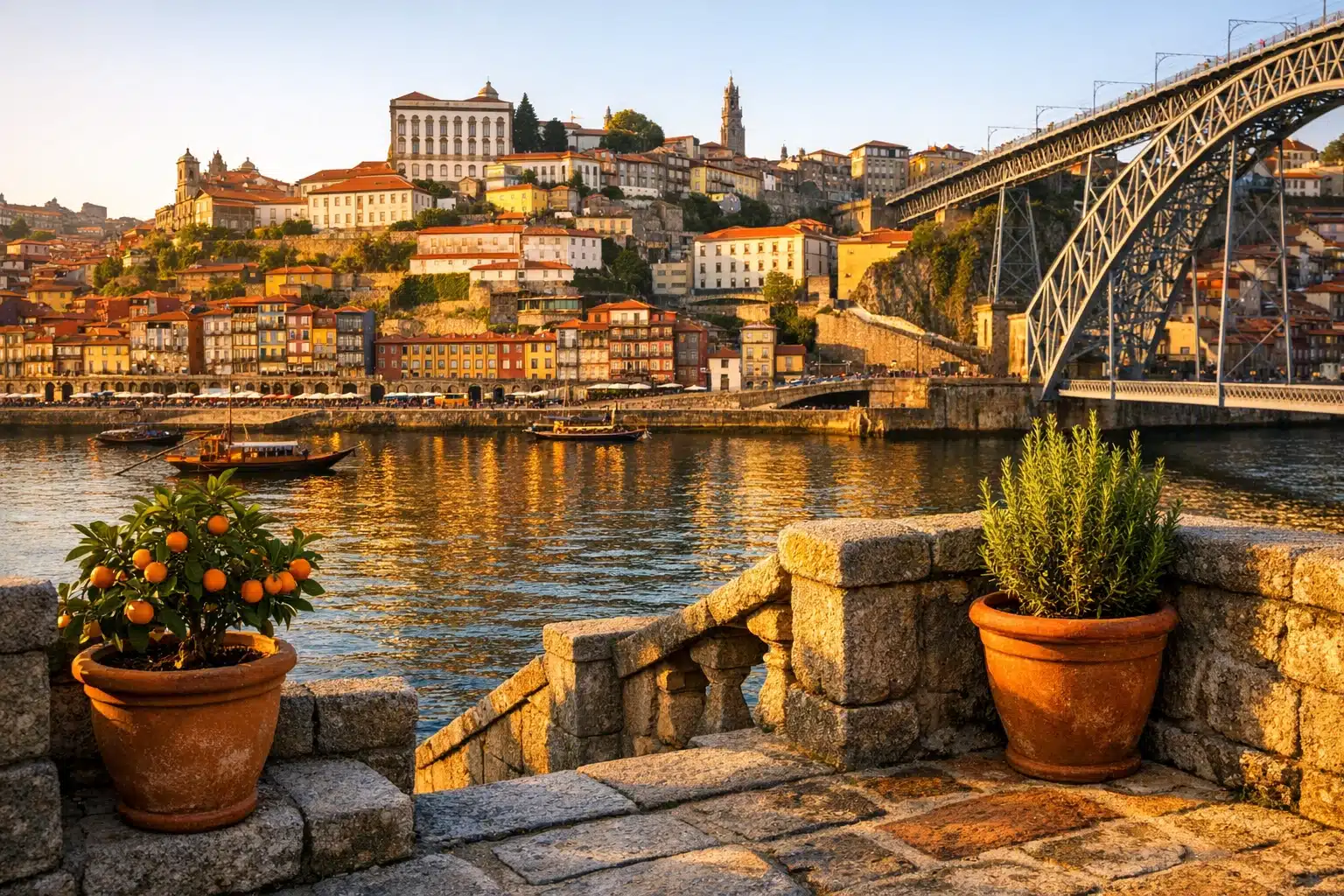
The Ribeira district is the postcard image, with narrow facades stacked above the river, but Porto’s appeal goes beyond the obvious view. Walking across the Dom Luís I Bridge into Vila Nova de Gaia gives one of the best perspectives in the country, especially near sunset, when the water catches fading light and the city seems built from bronze and slate. The historic connection to wine cellars in Gaia adds another dimension, yet even here the strongest impressions often come from ordinary details: laundry on balconies, tiled church fronts, small cafes serving soups and sandwiches, and locals moving through steep streets with the efficiency of habit.
The coast west of the center adds another layer. Foz do Douro, where the river meets the Atlantic, is elegant and open, with promenades, sea walls, and a calmer residential tone. Matosinhos offers a more functional and local seafood scene, and many visitors consider it one of the best places near Porto for straightforward fish restaurants where the quality matters more than presentation. This is a useful contrast to more polished resort dining. The north often feels less curated and therefore more intimate.
There are also good regional extensions from Porto. Viana do Castelo combines historic architecture with a handsome northern shoreline. Smaller coastal areas reveal beaches that feel broader, windier, and less softened by tourism than many in the south. The weather can be cooler and less predictable, especially outside summer, but that is part of the character. The Atlantic here is not merely decorative; it is forceful, visible, and often dramatic.
Travelers interested in local flavor should pay attention to food as much as scenery. Porto and the north reward curiosity with dishes and products that feel specific to place:
- Fresh grilled fish in Matosinhos
- Hearty regional cooking in traditional taverns
- Port wine cellars in Gaia for historical context
- Vinho Verde from the broader northern region
- Markets and bakeries that still serve a strong local clientele
For travelers comparing Lisbon and Porto, the choice is not about which is better. It is about mood. Lisbon is often easier on first contact. Porto reveals itself more slowly, but that slower reveal is exactly what many people come to value. It is a place for long walks, changing weather, deep flavors, and the kind of ocean view that feels earned rather than arranged.
From the Central Coast to the Algarve: Surf Towns, Cliffs, and Slower Villages
Beyond the major cities, Portugal’s coastline becomes even more interesting because it stops behaving like one single destination. The central coast, the Alentejo shoreline, and the Algarve each offer a distinct version of a seaside holiday, and understanding those differences can help travelers choose wisely. The central west coast is often the most Atlantic in spirit: windier, more surf-oriented, and less predictable in weather. Towns such as Nazaré and Peniche have earned international visibility, but they still connect to older local identities shaped by fishing and maritime labor. Nazaré, for example, is famous for giant winter waves due to the offshore Nazaré Canyon, yet outside major surf events it is also a functioning seaside town with strong traditions and a long beach culture.
Peniche and nearby Baleal have a different appeal. They attract surfers, younger travelers, and visitors who like a casual coastal setting where activity matters more than polish. The beaches here often feel wide open, and the sea has a restless energy that makes even a simple walk along the shore feel cinematic. Ericeira, closer to Lisbon, offers a similar draw with a bit more built-up village charm and strong food options. These places suit travelers who like a holiday with movement: surf lessons, cliff walks, seafood lunches, and evenings that feel relaxed rather than formal.
Further south, the Alentejo coast slows the rhythm. Towns such as Vila Nova de Milfontes and Zambujeira do Mar offer a less crowded coastal experience, especially outside peak summer. The scenery shifts toward long beaches, dunes, river mouths, and cliffs that feel more open and less built over. Comporta and nearby areas have attracted higher-end attention, but much of the broader region still retains a calm, understated atmosphere. It is a good choice for travelers who want space, natural beauty, and a quieter social tone.
The Algarve then introduces yet another version of Portugal. It is the country’s best-known beach region, but it should not be treated as one uniform strip. The western Algarve, around Lagos and Sagres, is scenic, dramatic, and shaped by cliffs and wind. The eastern Algarve, around Tavira and the Ria Formosa area, feels flatter, gentler, and often more traditional. Families may prefer the calmer waters and easier beach days of the east, while hikers and photographers often lean toward the west for its rock formations and headlands.
A helpful way to compare these regions is to match them with travel styles:
- Central coast for surf culture and raw Atlantic scenery
- Alentejo coast for space, quiet, and slower village life
- Western Algarve for cliffs, hikes, and dramatic viewpoints
- Eastern Algarve for easier beach time, birdlife, and a softer pace
This part of Portugal proves that a coastal holiday does not need to mean one resort, one beach, and one mood. Here, the sea changes character from region to region, and that gives travelers more control over the kind of experience they want.
How to Plan the Trip Well and Why It Suits Travelers Who Want More Than a Beach Break
A successful Portugal getaway usually comes down to pace. The country is compact enough to encourage movement, but that does not mean every itinerary should be packed. Many first-time visitors make the mistake of trying to combine Lisbon, Porto, the Algarve, and multiple smaller towns in one short trip. It is possible on paper, yet the result can feel like a sequence of check-ins rather than a holiday. A better approach is to choose one city base and one regional contrast. Lisbon with Cascais and Sintra works well for a shorter trip. Porto with the northern coast suits travelers who prefer depth over range. A longer holiday can connect Lisbon, the Alentejo coast, and part of the Algarve without becoming frantic.
Season matters too. Late spring and early autumn are often the most balanced times to go, because temperatures are generally pleasant, daylight is generous, and the busiest summer crowds have either not arrived or have already eased. July and August bring beach energy and a lively atmosphere, but also fuller roads, higher accommodation prices, and more competition for popular coastal stays. Winter can still be rewarding, especially in Lisbon, Porto, and surf-focused areas, though beach swimming is less central and weather becomes more variable.
Transport is one of Portugal’s strengths. Trains connect major cities effectively, and the Lisbon-Porto journey on the faster services typically takes under three hours. Buses fill many gaps, while rental cars become particularly useful for the Alentejo coast and parts of the Algarve where scenic stops and smaller beaches are easier to reach independently. In cities, walking is often the best way to understand place, though travelers should be ready for hills, cobblestones, and occasional steep climbs.
Budget-wise, Portugal often remains more accessible than several other western European coastal destinations, especially outside peak season and beyond the most premium resort pockets. That does not mean it is uniformly cheap, but good value is still possible through local guesthouses, neighborhood restaurants, and simple regional dishes rather than high-concept dining. Travelers hoping for a more local-feeling trip should consider a few habits:
- Stay at least two nights in each base rather than constantly moving
- Choose family-run accommodations where possible
- Eat lunch menus or daily specials in local restaurants
- Use trains for major links and save car hire for rural stretches
- Leave room for unscheduled hours by the water
In the end, Portugal suits a specific kind of traveler especially well: someone who wants beauty but not emptiness, comfort but not detachment, and memorable scenery with a sense of real life still attached. Couples, solo travelers, food lovers, walkers, remote workers planning a slower stay, and multigenerational families can all shape the country differently and still find value in it. The strongest reason to choose Portugal is not that it promises perfection. It is that it offers balance. Ocean views are easy to find here, but what stays with many visitors is the local charm around them: morning markets, tiled stations, harbor restaurants, village streets, sea wind at dusk, and the quiet feeling that the place does not exist only for tourists. That is what makes the trip worth taking.